New data from the World Health Organization show that global progress towards reducing air pollution exposure has slowed, while large inequalities between high- and low-income countries persist.
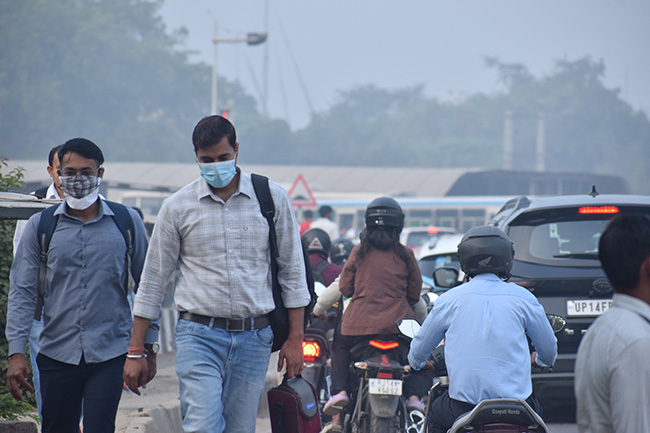
According to updated indicators tracking the Sustainable Development Goals (SDGs), global concentrations of fine particulate matter (PM2.5) declined until 2020 but have since largely plateaued. In 2023, around 6.5 billion people were exposed to PM2.5 levels above the least stringent interim target in the WHO air quality guidelines, with exposure rates 13 times higher in low- and middle-income countries than in high-income countries.
The data also show that around 2 billion people still rely on polluting fuels and inefficient stoves for cooking. Household and ambient air pollution continue to contribute to heart disease, stroke, chronic respiratory disease and lung cancer, with around 90 per cent of the health burden falling on low- and middle-income countries.
Regional trends remain uneven. Air pollution levels are highest in Asia, although the region has also recorded the greatest improvements. In contrast, little progress has been made in Africa and parts of western Asia. Access to clean cooking has expanded across much of Asia but remains particularly limited in sub-Saharan Africa, where nearly one billion people still lack access.
WHO says the updated indicators provide an important evidence base for stronger policies on clean air and energy, supporting its target of halving air pollution-related mortality by 2040.
Source: WHO 29 June 2026 https://www.who.int/news/item/29-06-2026-new-sdg-data-shows-stalled-progress-on-air-pollution-and-health