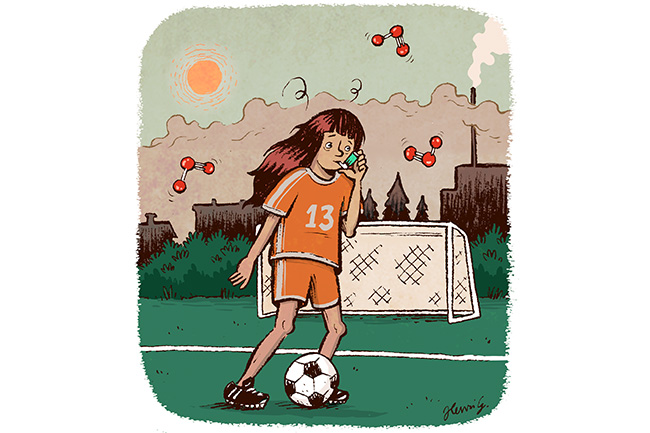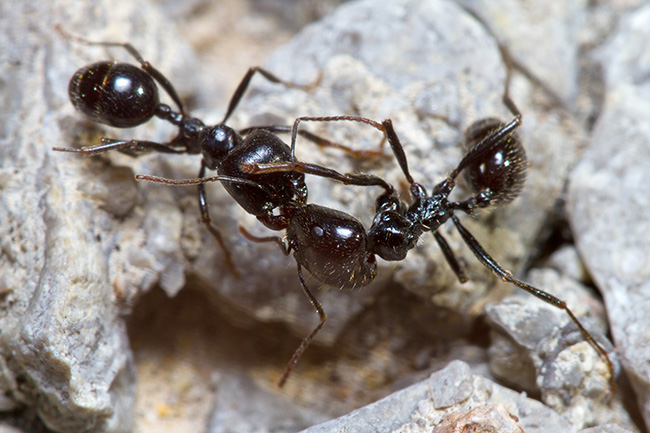
Ground-level ozone can disrupt the chemical signals ants use to recognise nestmates, causing them to attack members of their own colony, according to a new study from the Max Planck Institute for Chemical Ecology.
Researchers exposed ants from six species to ozone levels commonly recorded during summer pollution episodes. In five species, ozone-exposed ants were treated as intruders and attacked when they returned to the colony.
The study found that ozone degrades key scent compounds that enable nestmate recognition. In a separate experiment, ozone also disrupted brood care, with adult ants neglecting their larvae.
The findings suggest that air pollution may be an overlooked driver of insect decline by disrupting the social behaviour of ants and potentially other insects, including bees.
Source: Max-Planck-Gesellschaft 2 February 2026 https://www.mpg.de/26073819/air-pollution-causes-social-instability-in-ant-colonies