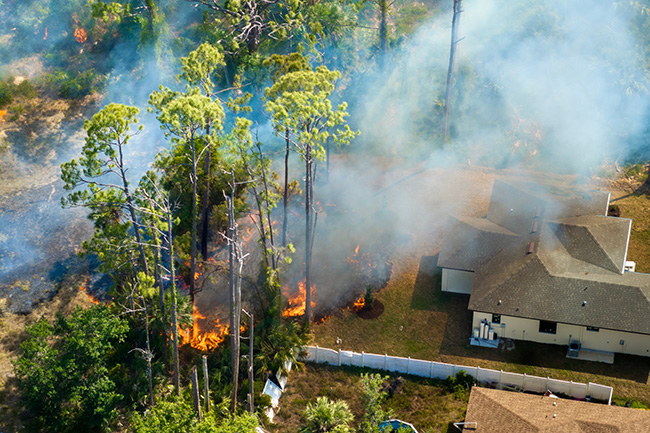
Wildfires are becoming more frequent and intense as the climate changes, affecting communities in multiple ways. People living close to fires are exposed to smoke and hazardous air pollutants, while smoke can also travel long distances and affect the health of people far from the fire zone. Understanding what is contained in wildfire smoke is therefore important for both nearby communities and those further away.
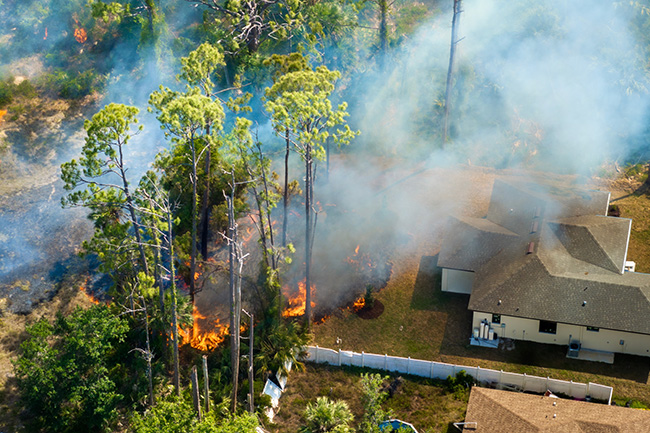
When forests and vegetation burn, they release a range of air pollutants. But what happens when fires spread into built areas and structures begin to burn?
A research team led by the U.S. National Science Foundation’s National Center for Atmospheric Research has produced the first comprehensive inventory of emissions from buildings destroyed in wildland–urban interface fires. The study, published in Nature Communications, shows that fires involving buildings emit a far more complex mix of hazardous pollutants than vegetation fires alone.
According to the researchers, when structures burn they release additional toxic substances—including hydrochloric acid and lead—due to the combustion of materials such as plastics, treated wood, wiring, and other household products.
Lead author Wenfu Tang explained: “If you think about what’s in a home or office, there are many things that could be harmful to humans if ignited. For example, if you burn a smartphone, you wouldn’t want to inhale the gas.”
Source: Nature Communications volume 16, Article number: 11443 (2025), https://www.nature.com/articles/s41467-025-66292-9