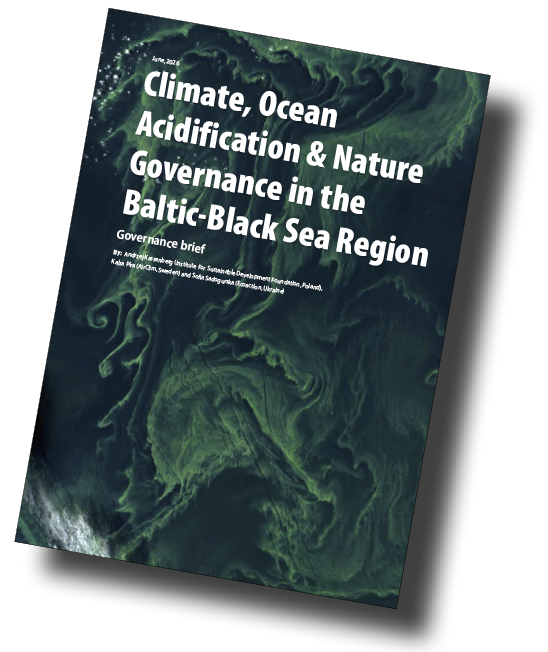
Ocean acidification remains one of the most overlooked consequences of climate change, despite being a direct result of rising atmospheric CO₂ concentrations. A new AirClim report examining the Baltic and Black Sea regions argues that climate and marine policies must be better integrated if Europe is to protect vulnerable marine ecosystems.
The report highlights that the Baltic Sea is acidifying faster than the global average in several areas while also experiencing rapid warming and widespread eutrophication. The Black Sea is also warming at an alarming rate, with coastal ecosystems facing growing pressure from nutrient pollution, acidification and declining oxygen levels.
According to the authors, these multiple stressors reinforce one another, threatening biodiversity, fisheries, tourism and other ecosystem services. Yet ocean acidification remains largely absent from climate policy frameworks, including National Energy and Climate Plans (NECPs), and is only weakly linked to international climate targets.
The report identifies fragmented governance as a major barrier to effective action. Climate policy, marine protection, river basin management and agricultural policy are often developed separately, despite their close interdependence. The authors argue for a "source-to-sea" approach that links emissions reductions, river basin management and marine protection.
Among the report's recommendations are stronger integration between SDG 13 (Climate Action) and SDG 14 (Life Below Water), harmonised monitoring of acidification indicators such as pH, pCO₂ and alkalinity, greater use of satellite observations alongside in situ monitoring, and the establishment of a Baltic–Black Sea Climate & Ocean Initiative to strengthen regional cooperation.
The report also calls for increased investment in ecosystem restoration, improved land–sea governance and expanded blue finance mechanisms to support adaptation and the protection of marine ecosystems.
With climate change accelerating, the authors conclude that ocean acidification should no longer be treated as a separate marine issue but recognised as an integral part of climate policy.
The report: https://www.airclim.org/publications/climate-ocean-acidification-nature-governance-baltic-black-sea-region