
Mercury emissions from coal-fired plants can be cut by well over 90 per cent, but this fact has so far been neglected in ongoing talks for a revised Heavy Metals Protocol.
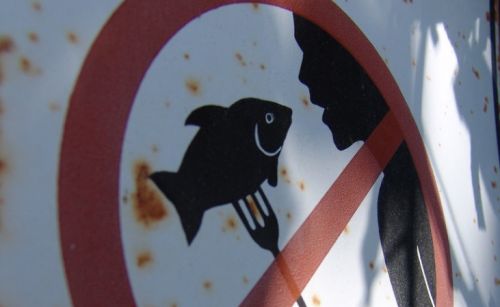 A revised Heavy Metals Protocol might make eating fish a less risky business in the future. Photo: Joey Rozier / Creative Commons
Coal-fired power plants are the largest man-made source of atmospheric mercury emissions in Europe and North America. They contribute about half of the anthropogenic mercury emissions in the EU. For some years, the Convention on Long-range Transboundary Air Pollution (CLRTAP) has been in the process of revising the 1998 Protocol on Heavy Metals. In these discussions, the introduction of an emission limit value (ELV) for mercury from coal-fired power plants of 30 micrograms per cubic metre (µg/m3) has been proposed. Even without modern air pollution control devices many coal-fired power plants can fulfil this limit value.
For many coal-fired power plants, mercury abatement will come as a co-benefit of reducing other main air pollutants, namely NOx, SO2 and dust. Some of the mercury is bound to particles and removed by the dust control devices, such as electrostatic precipitators (ESP), which are common practice, or fabric filters that are being used more and more. The water-soluble fraction of mercury can be captured by the wet flue gas desulphurisation systems (FGD) that are already widely used in the EU. In many of these cases mercury emissions will already be below 10 µg/m3. Elemental mercury in gaseous form is generally not captured by existing dust or sulphur removal systems. However, when a selective catalytic reduction (SCR) is applied this will promote oxidation of the elemental form and thus enhance mercury capture in a downstream FGD. Many large power plants already use SCR to reduce emissions of NOx. These installations can reduce mercury emissions to levels below 3 µg/m3 at no additional cost.
Even coal-fired power plants that are not fully equipped with conventional abatement techniques can meet an ELV of 3 µg/m3, as several techniques specifically aimed at cutting mercury emissions exist (see Box). While the additional costs for such techniques could amount to several million euros for a large plant, they would lead only to a very small increase in the price of electric power of about 0.0001 euro/kWh, which adds up to less than one euro per year for a family.
In the USA, about one-third of power generating capacity was equipped with FGD in 2005, and the US Environment Protection Agency expects that by 2015 this figure will increase to two-thirds of the installations.
In the Netherlands, all six coal-fired power plants currently in operation use ESP, FGD and SCR. Three new plants are being constructed and these will be equipped with FGD, SCR and a fabric filter, but no specific mercury abatement techniques. Their environmental permits state that their annual average emissions of mercury must stay below 3 µg/m3.
These emission control methods (ESP, FGD, SCR) are regarded as Best Available Techniques (BAT) in the EU, and for EU member states application of BAT is mandatory. This is reflected in the new Industrial Emissions Directive (IED) that will replace the current 2001 Large Combustion Plant Directive (LCPD) after 2012. This sets stricter NOx emission limit values, which means that all new installations and many existing ones will have to be equipped with SCR.
The 1999 Gothenburg Protocol also requires the use of BAT, which implies that new coal-fired power plants in European countries that have ratified the protocol also have to use ESP, FGD and SCR. The ELVs in the new protocol, to be signed before the end of this year, are expected to be stricter than the current ones. Mercury emissions from large coal-fired power plants in those countries that sign the new protocol will be at levels of 3 µg/m3 without additional costs.
It can therefore be assumed that within the next 15 years or so, virtually all coal-fired power plants in Europe will be equipped with abatement techniques for NOx, SO2 and dust removal, and they will thus achieve emission levels far below 30 µg/m3. In many cases emissions will be below 3 µg/m3.
Consequently, the ELV for mercury in the revised Heavy Metals Protocol could be set at 3 µg/m3 for new installations and some of the existing installations without entailing extra costs for the operators.
André Peeters Weem
Mercury removalThere are several techniques commercially available for the reduction specifically of mercury emissions, with removal efficiencies of around 90 per cent. Activated Coal Injection upstream of the electrostatic precipitation or fabric filter increases the mercury fraction that can be removed from the flue gas. Injection of brominated active coal also improves mercury removal by flue gas desulphurisation. Using activated coal as adsorbent can reduce mercury emissions to levels of between 0.5 and 3 µg/m3. Besides activated coal other adsorbents and methods with similar effects are commercially available.Information: Reduction of mercury emissions from coal-fired power plants, by André Peeters Weem, (InfoMil, NL Environment). Informal document No. 3, presented to the 48th session of the Working Group on Strategies and Review of the Convention on Long-range Transboundary Air Pollution, 11-15 April 2011.
 Europe should take an integrated approach to nitrogen management. This is the main message of the European Nitrogen Assessment, a new report launched during the "Nitrogen and Global Change" conference, in Edinburgh (UK) from 11–14 April, 2011.
 The number of premature deaths in Europe caused by air pollutant emissions from international shipping is estimated to amount to approximately 49,500 in the year 2000, and rise to 53,200 in 2020.
 There are sufficient resources to provide the world with renewable energy. The main constraint on development is public policy, that is the main message in a new IPCC report.
 A handful of measures targeting black carbon and tropospheric ozone can reduce future global warming by 0.5°C, according to a UNEP and WMO report.
 Germany's lignite power plants still dominate the CO2 list. Serbia is registering emissions for the first time and enters both the NOx list and the SO2 list.
 Mercury emissions from coal-fired plants can be cut by well over 90 per cent, but this fact has so far been neglected in ongoing talks for a revised Heavy Metals Protocol.
 As no revision of the European Air Quality legislation is planned until at least 2013, the EU has said it will focus on source-oriented legislation in the meantime. Often neglected in comparison to regulations concerning road vehicles, the so-called "non-road" sector, which includes locomotive ..
 "Curbing mobility is not an option," says the European Commission in a new roadmap for the transport sector, expressing a view that immediately sparked criticism.
 Prompt action is required to further reduce particulate matter, ground-level ozone, and nitrogen dioxide – an EU clean air strategy should be adopted in 2013.
 Significant environmental improvements can be achieved while additional costs still stay well below 0.1 per cent of GDP. Moreover, health benefits alone outweigh the costs by ten times or more.