The economic recovery during and after the Corona pandemic is an opportunity for decarbonisation

By mid-2020 many countries are going through the worst economic contraction since the 1930s. Some economists believe it will be essentially V-shaped: first a steep fall, then a steep return to normal. Others believe a large number of businesses and some industries are broken and can’t be fixed.

The more persistent the pandemic, and the longer we have to wait for a vaccine that can restore us to relative normality, the bigger the risk of a 1930s-style long and deep depression. The 1929 Wall Street Crash led to Hitler and the Second World War. It did not end until about 1944 (in the US), when the economy geared up to full capacity due to strong demand led by arms production.

The much smaller 2008 recession did not lead to a major war, but it did again lead to a wave of right-wing nationalism.

Whether through wisdom or just for short term self-preservation, most governments on Earth are now handing out unprecedented amounts of money. They hope that they will save businesses with growth potential, and not to hopeless cases. It is a difficult task.

Will cruise ship tourism, commuting to work, eating out or even hair-cutting return to 2019 levels in 2021? 2025? Ever?

Should it return, all of it? The longer the crisis lasts, the more people, including Ministers for Finance, will ask that question.

“Helicopter money” spread out immediately and at random is better than doing nothing, if the alternative is waiting for demand to shrink and deflation to freeze the economy.

Traditional anti-recession politics is to put money into loss-making businesses to save jobs and into all kinds of “infrastructure”, especially roads, or other construction work so as to create jobs.

But some expenses are more sustainable than others, financially and ecologically – especially with a slightly longer perspective.

In May, the EU Commission proposed an updated EU budget for 2021–2027 of €1100 billion and a dedicated EU recovery budget for 2021–2024 of €750 billion, which was later agreed upon. It claims to be green, but according to an analysis from Agora Energiewende, “the few budget elements that specifically address needed investment in the buildings, transport, power and industry sectors total only 80 billion euros”, which is clearly not anywhere near enough to put Europe on course for 1.5 degrees.

This 80 billion is not all, however, as member states have stimulus packages of their own. Neither is 80 billion the last word. It may become much more.

A closer analysis of the EU budget and package will have to wait, so here is just some general background on stimulus packages.

Support for cruise ships will save jobs and sustain purchasing power, but if there is not much market for cramming thousands of 70 year-olds on such journeys, it is a dead loss.

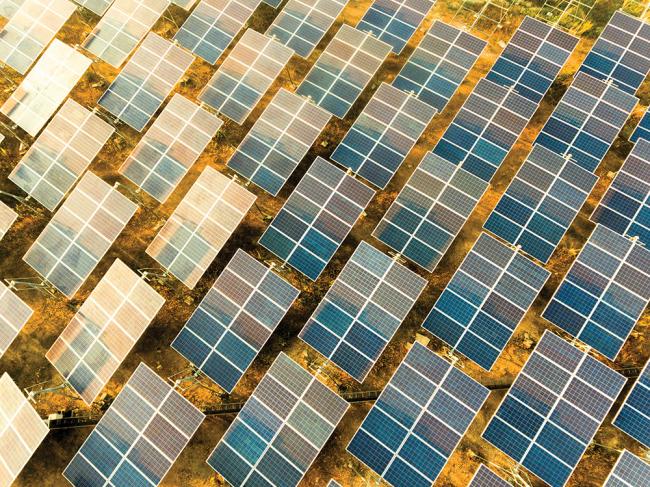
Investment in solar power creates jobs immediately. People employed there will spend their wages and turn vicious circles in the economy into virtuous circles. But it also will produce electricity for perhaps 30 years at low cost, and help to reduce carbon emissions, also at very low cost. The same goes for wind power, energy efficiency in buildings, and heat pumps.

As Jigar Shah, a renowned US clean energy entrepreneur and author put it:

“It’s critical for us to recognize that we are being looked to by everyone from prominent political campaigns to elected officials in your town to provide the necessary economic development to get us out of Covid.”

Some of the best climate measures are also good for economic recovery. AirClim polled NGOs in the Nordic and Baltic countries, as well as Germany, Poland and Russia, to find out what they see as the most promising climate measures. This resulted in a list of 150 measures1, from which a Top 10 list was created. Acid News tried to show in the “update” of the Top 10 in late 2019 that the proposed measures can be a very valuable tool for use in the National Determined Contributions (NDCs) to the Paris Agreement.

Several of these can also be put to good use not only to reduce emissions but also to create jobs immediately, stimulate the economy generally and to save money compared to other economic stimuli, now that politicians are ready to spend enormous amounts of cash.

How do those measures look now, when seen through a Covid recovery lens? Here is an attempt.

1. Taxing carbon

Carbon taxes are good for the transition from fossil fuels. They have no direct added value for recovery. Some jobs are lost in the fossil industries, but other jobs are gained in renewables and efficiency (see below), which may be more labour-intensive.

2. Support for renewable electricity

Definitely a win-win-win for the climate, immediate jobs and long-term payback. Denmark’s wind energy sector employs 33,000 people, many more than used to work in coal power.

3. Improved efficiency of buildings

Same as renewable electricity. A recent US study2 showed that USD 83.5 billion invested in efficiency measures could save USD 123 billion in fuel costs, create 660,000 jobs in 2020–2023, twice as many job-years over the whole investment, while reducing CO₂ emissions by 906 million tonnes. In a zero-interest world, this means an effective stimulus, and emission reductions at no cost.

4. Other efficiency improvements (e.g. EU labelling of fridges)

A nation that requires more efficient appliances will produce and export more of such appliances to other countries.

5. District heating efficiency

Improvements in district heating save money, improve air quality and create jobs. The scope is not enormous, but district heating should be well maintained where it exists. There should also be a market for district cooling, which has some advantages over individual cooling, such as better efficiency and less noise. District heating and cooling can both be used to absorb surplus electricity, and make way for a larger share of wind and solar.

If plans for new district heating or cooling already exist, they should be sped up. If such plans do not exist, the lead time may be too long to be of use for recovery.

6. Vehicle emission standards

For the near future, EU standards probably have the main short-term effect of promoting electric vehicles. Electric-only vehicles do not create many jobs, and meanwhile a lot of jobs are lost in the production of internal combustion vehicles. But to save the European car industry as a whole, the transformation cannot be postponed, as even more jobs would be lost then. Most car manufacturers have been extremely slow on the uptake. Giving in to them will not help the industry. Although it would help the oil industry, for no good reason.

7. Other measures to reduce traffic CO2 (taxes for vehicles and fuels)

As above. To save the automotive industry it will take a loud and clear message to make manufacturers understand what needs to be done.

Some measures will lead to earlier scrapping of gas guzzlers, which creates some new jobs, as does the installation of charging stations and hydrogen pumps.

Improving the recycling of products and materials can create a lot of new jobs.

8. Infrastructure planning

One high priority should be the building of new power lines and planning for them, especially to accelerate already existing plans. The same goes for railways. More long-term projects also create immediate jobs, e.g. for engineers and architects who can also be hit hard by an economic downturn.

Some infrastructure changes can be made quickly, as seen in Brussels and Paris during spring 2020, when many street lanes were converted for bicycles.

In view of recent development, many plans for highways, airports and harbours should be reviewed, as it looks unlikely that air travel, for example, will return to 2019 levels. Obviously not building an unnecessary airport terminal means fewer jobs than building it, but if the money is used on softer structures such as schools, more jobs are created.

9. Waste and recycling

Reducing and reusing waste is usually labour-intensive, so it ticks all the boxes.

10. Land use (afforestation, better agricultural practices, wetland reclamation)

Another a win-win-win. Land use management can create jobs in reforestation, gardening, ecological agriculture, and benefit biodiversity. Some of the jobs are highly qualified, but many can be performed by people on the margin of the labour market, with little training, immediately.

Much has happened since 2013, even before the Covid crisis, and a few other measures were added in the article of late 2019.

11. Emissions trade – working at last!

The ETS creates no jobs as such, but exactly like a CO₂ tax, it is transformative, saves money and probably creates more jobs than it destroys in the short term and definitely so in the medium and long terms. At least during the first several months of the Covid crisis, ETS prices have stayed in the €25–30 region, and if they were to drop much, the EU would not, and should not, accept that.

12. Climate laws and stricter targets

Much like the ETS and carbon taxes, they create no jobs, but add credibility to clean energy investment, which does create jobs.

13. Hydrogen

After many false starts over several decades, hydrogen has moved up the agenda in several countries at the same time, and is increasingly seen as a necessary part of decarbonisation, as a buffer for increasing wind and solar. Construction of electrolysers, storage and pipelines creates direct and indirect jobs, some of them soon.

14. HFC phase-out

The phase-out of climate-hostile refrigerants is a very cost-effective climate measure. It also creates jobs in a rather bumpy sector which needs to grow for the longer term. The people that either replace the refrigerant or install the new cooling devices are the same people that install heat pumps. An accelerated phase-out should save energy and money, because newer cooling equipment uses less electricity.

15. Electric food (and other innovations)

Most of the methods for saving the climate, saving money and creating jobs are well known. We should not primarily be looking for “breakthrough” technology, but some new ideas should be supported, as in the case of producing protein food or fodder from atmospheric nitrogen, water and CO₂. Some of them will work, some not. This will not lift us out of the corona recession, but it will create some jobs for a relatively modest amount of money.

Whether electric food will work or not, innovative approaches are needed for the global food industry, which is very unsustainable.

The above is a sketch of a future AirClim project. NGOs in the same 11 Northern European countries will be asked again to name the best 10 climate measures in their countries, with a view to further assessing their effectiveness in averting a slump, raising ambitions in NDCs and creating jobs in the green recovery.


Fredrik Lundberg


1. https://www.airclim.org/publications/10-best-climate-mitigation-measures...

2. https://www.aceee.org/sites/default/files/pdfs/stimulus_analysis_fs_8-4-...

© VectorMine/ Shutterstock.com

Plans to tackle key air pollutants insufficient

In its first report on countries’ progress towards EU air pollution goals, the European
Commission said that most member states are at risk of missing their binding emission
reduction targets for both 2020 and 2030.

Binding EU air pollution emission limits still breached

In 2018, the national emission ceilings for ammonia were still violated by five member states, although total ammonia emissions seem now to have plateaued after five consecutive years of increase.

© Amy Johansson/ Shutterstock.com

Phase-out ship scrubbers

The International Council on Clean Transportation (ICCT) is calling for all open-loop scrubbers to be converted to closed-loop, and for an eventual ban on the technology.

Global ship emissions keep on rising

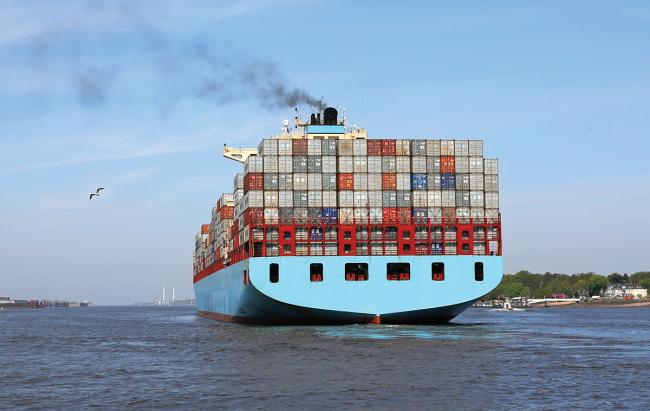
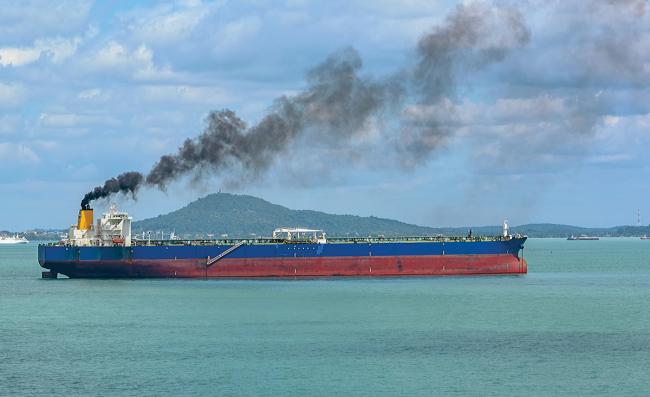
In 2018, worldwide shipping consumed some 330 million tonnes of fuel oil, resulting in emissions of 1056 million tonnes of carbon dioxide. Unless concerted action is taken, these emissions are expected to grow by up to fifty per cent by 2050.

© Igor Grochev/Shutterstock.com

EU Commission proposes strategy for energy system integration

The European Commission issued its strategy – “Powering a climate-neutral economy: An EU Strategy for Energy System Integration” – on 8 July 2020. This is one of several policy initiatives which have been presented as a part of the European Green Deal.

New civil society scenario shows pathway towards 65% emission reductions by 2030

The European Commission will propose in the coming weeks an updated EU 2030 climate target. European NGOs have developed their own Paris Agreement Compatible (PAC) energy scenario that illustrates how EU greenhouse gas emissions can be cut by 65% by 2030.

© SofiaV/ Shutterstock.com
© Love Silhouette/ Shutterstock.com

Scaling up renewable energy investment in emerging markets

The untapped potential for the renewable energy sector in emerging markets in Africa, Asia and Latin America is enormous, and should be addressed urgently in recovery efforts post-Covid-19.

Editorial

Place the most vulnerable at the core of the response to the climate crisis. The citizens of Small Island Development States (SIDS) are among the most vulnerable people to climate change. More than 60 million people living on these islands are threatened directly by sea-level rise and more intense weather-related natural disasters, caused by global heating.

Serious health effects and high mortality rate from burning fossil fuels and climate heating

Swedish medical associations have summarised the current scientific evidence on the health effects of climate heating and highlighted important areas where efforts to reduce carbon dioxide emissions, such as phasing out fossil fuels and reducing meat consumption, will also have profound health benefits.

© Siyapath/ Shutterstock.com

Climate crisis could displace 1.2bn people

1.2 billion people living in 31 countries that are not sufficiently resilient to withstand ecological threats face being displaced within 30 years, according to a new report.

© ArtSvetlana/ Shutterstock.com

Eco-label for stoves

Residential burning of wood, coal and gas for home heating is a major source of air pollution, such as health-damaging PM. 

The last EU emission standards for road vehicles?

The EU is currently in the process of setting new pollutant emission standards for light and heavy-duty vehicles.

Oil or Paris

The stakes are high for the Swedish government when it decides whether to permit a big residue oil refinery in Lysekil. If it says yes, Sweden is unlikely to reach its climate target. If it says no it is a setback for oil-exporting countries, especially Norway and Saudi Arabia.

National dietary guidelines could reduce greenhouse gas emissions

Official UK dietary advice, known as the Eatwell Guide, could reduce the risk of premature death by an estimated 7% and contribute to a significant reduction in greenhouse gas emissions – if it is followed.

The economic recovery during and after the Corona pandemic is an opportunity for decarbonisation

Some of the best measures for the climate, as suggested by NGOs in a poll for AirClim, are good for restarting the economy too.

In brief

EU infringement actions on air pollution

In May, the European Commission issued a reasoned opinion, threatening to take Slovenia to the EU Court of Justice if it does not comply within four months with the Air Quality Directive. Slovenia failed to ensure compliance with the limit values for PM10 in Celinsko Obmocje and has not taken appropriate measures to keep exceedance periods as short as possible.

Romania was sent a formal notice over infringements of the same directive, with the threat of a reasoned opinion to follow if action is not taken within four months to reduce levels of NO₂.

Bulgaria and Poland were cautioned for not allowing citizens to challenge public authorities over the air quality plans required under EU law, while France, Cyprus and Lithuania were similarly cautioned over failures to fully incorporate the National Emissions Ceiling Directive into national law.

Source: Ends Europe Daily, 14 May 2020.

The full 14 May infringements package: https://ec.europa.eu/commission/presscorner/detail/en/inf_20_859

NO2 in German cities

A new report by the German Federal Environment Ministry (BMU) shows that nitrogen dioxide (NO₂) concentrations exceeded the air quality limit of 40 micrograms of NO₂ per cubic metre of air (µg/m³) per year in 25 cities in 2019, compared to 57 cities in 2018.

On average, the annual mean NO₂ values in 2019 at measuring stations close to traffic were around 4 µg/m³ lower than in 2018. The reasons for the decline were: Local measures such as speed limits, driving bans or the use of less polluting buses; nationwide measures such as software updates; funding under the programme “Clean Air 2017–2020”; the renewal of the vehicle fleet with vehicles that in real operation have lower NOx emissions; and meteorological influences that affect the spread of air pollutants.

Source: AECC Newsletter, June 2020.

The BMU press release (in German): www.bmu.de/pressemitteilung/stadtluft-wird-sauberer-zahl-der-staedte-ueb....

UK government proposes new law to prevent illegal deforestation in supply chains

The new law that is proposed by the UK government requires large companies to ensure that the supply chain commodities they use, such as soy, beef and palm oil, have not been produced on illegally deforested land. Further, they must show that they have taken proportionate action to prove that this is the case. The new law is intended to restrict the global problem of illegal conversion of forests and other important natural areas into agricultural land. The law proposal is currently up for consultation in the UK government.

Source: https://fcrn.org.uk/research-library/proposed-uk-law-restricts-illegal-d...

High emissions from domestic solid-fuel burning

Burning just 2–3 kg of coal, briquettes, peat sods or wood produce the same amount of particulate matter (PM) as driving a typical, modern diesel car for several thousand kilometres, according to a study by University College Dublin, published by the Irish Environment Protection Agency.

The emission factors were obtained using a domestic stove designed to current standards, and they represent emissions over the complete combustion cycle, from ignition through to extinction. The study covered several fuel types: sod peat, peat briquettes, bituminous and smokeless coals, hardwood, softwood as well as firelighters.

The authors conclude that smoky coal bans “while laudable in principle” are ineffective and that all combustion of solid fuels in manually operated, domestic appliances in urban areas should be discouraged instead.

Source: Independent.ie, 11 July 2020.

The report “Emission Factors from Domestic-scale Solid-fuel Appliances”: http://www.epa.ie/pubs/reports/research/climate/research324.html

French government faces heavy fine

The French government will be fined €10 million every six months if it does not reduce air pollution in line with the law, the Council of State, the country’s highest administrative court, said on 10 July. Following complaints by environmental organisations, the council ordered the government in July 2017 to take measures to reduce nitrogen dioxide and particulate matter pollution in several regions to bring them in line with the EU Air Quality Directive.

“The council notes that the government has not taken the necessary steps to reduce air pollution in eight zones,” it said in a statement, adding that the fine would be the highest penalty it has ever issued. The fines paid by the state would be transferred to environmental organisations, the council said, adding that the fines could also be increased.

Source: Reuters, 10 July 2020.

Germany sued over air pollution failures

ClientEarth and Environmental Action Germany in May lodged a legal challenge with the Higher Administrative Court of Berlin and Brandenburg, in relation to flawed national air pollution control programmes that put Germany on track to miss legally binding emission reduction targets for four out of five pollutants in 2030.

Lawyer Caroline Douhaire, who is representing the organisations in the case, said: “Germany has never been a model student when it comes to implementing EU air quality law. The ongoing breaches of NO₂ limits in cities across Germany have prompted multiple court rulings against authorities, as well as an EU-level case against the country itself. The German government must not make the same mistake in reducing national emissions under the NEC Directive. We need measures in place now to secure the right emissions reductions in time – and currently, this is not what we’re seeing.”

Source: ClientEarth media release, 26 May 2020. Link: https://www.clientearth.org/press/germany-sued-over-major-national-air-p...

Shipper MSC in top 10 list of EU carbon polluters

The Mediterranean Shipping Company (MSC) overtook Ryanair in the top 10 rankings of the EU’s biggest carbon dioxide emitters in 2019. Data compiled by Transport & Environment (T&E) showed MSC emitted an estimated 10.72 million tonnes of CO₂ in 2019, ranking it seventh in the EU, rising above Ryanair at No. 8, which produced an estimated 10.53 million tonnes.

Both MSC and Ryanair still emit less CO₂ than the biggest coal-fired power plants in the top 10 list. Six German plants and two Polish plants make up the rest of the list, with Poland’s Belchatow power station the biggest polluter.

Source: Reuters, 3 July 2020

T&E press release: https://www.transportenvironment.org/press/top-shipping-polluter-overtak...

Greenhouse gas production from aquaculture

Global aquaculture accounted for around 0.49% of anthropogenic greenhouse gas emissions in 2017, approximately the same level as emissions derived from sheep meat production. These are findings from a recent study that quantified the global GHG emissions from aquaculture (excluding the production of aquatic plants). When emissions are measured per kilogram of food, aquaculture shows a lower emission intensity than meat from buffalo, cattle, goats and sheep, while the production of meat from pigs and chickens show a similar emission intensity as aquaculture.

The relatively low emission intensity of aquaculture was attributed to the absence of methane production in the digestive system of the fish, together with the high fertility of fish and their efficient conversion of feed into edible product.

Aquaculture production is an important part of global food security, and awareness of its contribution to GHG emissions and how to mitigate them is important for expanding aquaculture sustainably.

Report: https://www.nature.com/articles/s41598-020-68231-8

Methane rises to highest level on record

Animal farming and fossil fuels have driven global emissions of methane to the highest level on record, according to new data from the Global Carbon Project. Since 2000, emissions have risen by nine per cent (approximately 50 million tonnes a year), and concentrations are currently increasing at a rate of around 8–12 parts per billion (ppb) per year.

Source: The Guardian, 14 July 2020
Further information: https://www.globalcarbonproject.org/methanebudget/

Dirty air endangers World Heritage Sites

Air pollution can destroy our cultural heritage, including historical buildings and monuments. A recent study under the Air Convention evaluated risks of potential damage and associated costs due to air pollution for 21 UNESCO World Heritage Sites in six countries: Croatia, Germany, Italy, Norway, Sweden and Switzerland.

Corrosion and soiling by dirty air can lead to severe economic losses through high maintenance and restoration costs. For example, the total annual cost of maintenance work from soiling of the limestone surface of the Colosseum in Rome, Italy, was estimated to be about €680,000 per year.

Source: UN ECE press release, 11 May 2020. Link: https://www.unece.org/info/media/presscurrent-press-h/environment/2020/d....

Science worst-case scenario is reality right now

Climate science’s worst-case scenario isn’t just an awful warning. It describes what is already happening right now. A report from the US Proceedings of the National Academy of Sciences took a closer look at the evidence for climate change in terms of carbon dioxide emissions and climate models, and at cumulative greenhouse gas emissions since 2005. By 2020, the emissions matched the “business as usual” predictions very closely. The study then extended the trends to 2030, and to 2050, with the same outcome. This means that by the end of the century the planet could be 3.3°C to 5.4°C warmer than it was at the start of the Industrial Revolution and the worldwide switch to fossil fuels. The worst-case scenario should remain on the table as a useful risk assessment tool the study concludes.

https://climatenewsnetwork.net/climate-sciences-worst-case-is-todays-rea...

EU can reach climate neutrality without CCS – German environment agency

The Federal Environment Agency (UBA) outlined measures that demonstrate how EU greenhouse gas emissions (GHG) neutrality is possible without controversial carbon capture and storage (CCS) and with limited amounts of bioenergy, in a study published in November 2019. The study urges efficiency in all energy-consuming sectors (industry, buildings and transport) as well as “far-reaching electrification”.

“These measures can reduce the final energy demand (including international transport) by about 37 percent and the share of electricity can be increased to almost 50 percent,” according to the study. The paper recommends a “broad portfolio” of renewable energy options as well as substantial quantities of renewable fuels produced from renewable electricity via electrolysis or based on biomass. The study also requires lowering the levels of agricultural and forestry activities. In 2015, agriculture was responsible for 10 percent of EU GHG emissions, according to the study. “A reduction of 95 percent compared to 1990 is not possible without abandoning production and reducing livestock numbers.”

https://www.umweltbundesamt.de/sites/default/files/medien/1410/publikati...

Heating our climate damages our economies

A PIK study reveals greater costs than expected and that damage from weather extremes would be most costly of all. Previous research suggested that a 1°C hotter year reduces economic output by about 1%, whereas the new analysis points to output losses of up to three times that figure in warm regions and finds significant economic losses: 10% on a global average and more than 20% in the tropics by 2100.  This is still a conservative assessment, since the study did not take into account damage from, for example, extreme weather events. Every tonne of CO₂ emitted in 2020 will cause economic damage amounting to between 73 and 142 dollars in 2010 prices. By 2030, the so-called social cost of carbon will already be almost 30 percent higher due to rising temperatures. By way of comparison: the carbon price in European emissions trading currently fluctuates between 20 and 30 euros per tonne, while the national carbon price in Germany rises from 25 euros next year to 55 euros in 2025. These current carbon prices thus reflect only a small part of the actual climate damage. According to the polluter-pays principle, they would need to be adjusted upwards significantly, the study says.

https://www.pik-potsdam.de/en/news/latest-news/heating-our-climate-damag...

Phase-out of combustion-engine cars in Europe

A briefing paper by the International Council on Clean Transportation (ICCT) lists announcements by select European local and national governments as well as global car manufacturers to phase out passenger cars with internal combustion engines.

Almost half a dozen countries in Europe have set phase-out targets and dates for combustion-engine passenger cars. In addition to national commitments, almost 30 cities have made plans or have pledged to prohibit combustion-engine cars altogether in urban centres or entire metropolises, with the main aim of improving local air quality, partly focusing on full bans for diesel vehicles at an earlier stage than gasoline-powered cars.

Such announcements are important signals to the EU to put in place a comprehensive phase-out strategy at the EU level, e.g. via the revision of the EU car CO₂ standards. Additional measures, such as allowing member states to mandate national phase-outs and enforce penalties for non-compliance, could provide an additional push for car manufacturers to align their strategies, but the legal basis for such bans has yet to be reviewed at the EU level, according to the ICCT.

The ICCT briefing: theicct.org/sites/default/files/publications/Combustion-engine-phase-outs-EU-May2020.pdf

Rise in plant-based ready meals sold in UK

The UK NGO Eating Better shows in a new report that the proportion of ready meals that is plant-based has increased significantly in UK supermarkets. From 3% in 2018 to 16% in March 2020, plus another 9% when vegetarian meals that are not fully plant-based are included. But more than four out of five ready meals in UK supermarkets still contain animal foods.

Source: https://fcrn.org.uk/research-library/proportion-plant-based-ready-meals-....