Oil and fossil gas companies Equinor, Shell and Total plan CO₂ storage with Norwegian government

CO₂ has been stored in a geological formation under the seabed since 1996 in the Norwegian part of the North Sea. The CO₂ was separated from natural gas extracted from the Sleipner gas field. Its storage in the Utsira geological formation has been widely used as a proof that CO₂ storage already exists and that it will work for other types of CO₂ storage as well. This is not true. An article in Acid News No. 2 June 20181 revealed the truth behind some of the myths about this method of storage. The CO₂ from the Sleipner field is close to the storage site, and has to be separated from the natural gas anyway. This reduces the cost of the operation compared to CO₂ being transported over long distances from CCS plants on land. The separation of CO₂ from exhaust gases in power plants or industrial processes also adds to the cost, in contrast to the Sleipner plant.

A consortium of several major oil companies has a project that aims to establish a very different type of CO₂ storage under the seabed in the North Sea. This is planned to receive CO₂ by pipeline from temporary storage onshore in Norway. The aim is to receive and store CO₂ from CCS plants in Norway and in other countries. This is called the Northern Lights consortium, and consists of Equinor, Shell and Total. The area designated for storage is in a geological formation called the Johansen Formation, situated between the Troll and Oseberg oilfields off the coast of Norway.

Equinor was given permission to develop this CO₂ storage project on behalf of the Northern Lights consortium in January 2019. The permit was given based on a plan to investigate the formation and its suitability for CO₂ storage. Equinor has conducted the exploration on its own, based on the plan and the conditions set in the permit. No external or independent entity was involved in the actual exploration of the formation. Such independent scrutiny of the results will take place afterwards when the application is submitted.

The area has seen considerable oil and gas exploration and extraction activity in the past. This has led to a substantial amount of seismic data about the geological formations in the area. These data have been analysed to determine the viability of the formations for CO₂ storage. Test drilling started in November 2019, to extract cores of material for further investigations. The test cores have been studied to see if the theories about the geology based on the seismic data can be confirmed. According to the website of the Northern Lights consortium, the results from drilling have confirmed the suitability of the formation as storage for CO₂. The well will later be used as an injection well when storage becomes operational. No further test drilling is planned, according to the Norwegian Environment Agency.

On its website the Northern Lights consortium states that a permit from the Norwegian Environment Agency (NLA) is necessary before injection of CO₂ may start. According to sources in the NLA, an application from the Consortium is not due for at least a year from now. There have been consultations between the Consortium, NLA and the Norwegian Petroleum Directorate for a period of time regarding the application and its content. The responsibility for the permit is shared between the NLA and the Petroleum Directorate. If the application process runs as normal, the operation of the CO₂ storage is unlikely to start before 2023–24.

As this is essentially a government project, the progress of the project is absolutely dependent on an investment decision by the government. This has been postponed many times already. Otherwise, the NLA does not seem to see any substantial Norwegian legal or administrative barriers to the project. However, the legality of importing CO₂ from CCS plants in other countries may not be so clear. The London Protocol, which aims to stop the uncontrolled dumping of waste in the ocean, has been changed in order to allow “CO₂ sequestration in sub-seabed geological formations.” However, only six of the parties to the protocol have ratified this 2009 amendment to article 6 of the London Protocol. Twenty-nine other signatories to the protocol need to accept the amendment before it can enter into force. In the meantime, efforts have been made to get around this problem, and find a temporary solution. Until the amendment can enter into force, or a temporary solution can be found, other countries cannot export CO₂ to the storage facility without coming into conflict with the London Protocol. This may represent a major barrier to the project in addition to the problem of the essential Norwegian government financing of the storage.

The capacity of the storage reservoir will be much larger than is needed to store CO₂ from one, possibly two, CCS plants in Norway. Without additional CO₂ from other customers willing to pay a high price per ton of CO₂ sequestered, the economics of the project may not make it feasible as a commercial operation. The price for a ton of CO₂ must be at least USD 50, according to an earlier estimate by Equinor. At present the price is much lower, down to 10 percent or less of the required price for a commercial operation. The initial phase of the project will depend on massive government subsidies to get off the ground.  Subsidies are in principle forbidden within the EU Inner Market, of which Norway is also a member. But this prohibition may be lifted, if a project is deemed to be of great environmental benefit. This is the argument used by ESA, when it recently approved the government subsidies for the Northern Lights project.  (ESA is the EFTA Surveillance Authority). This was to be expected, and a permit from ESA was not considered as a major obstacle for the project earlier in the process.

In conclusion, there do not seem to be any major legal or bureaucratic obstacles to prevent the Northern Lights Consortium from getting a permit from the Norwegian authorities to build a CO₂ storage facility and receive CO₂ that can be stored there. But the project depends on massive subsidies from the Norwegian government to build and operate the facility. An investment decision has still not been made by the Norwegian government. These subsidies will only cover the cost for sequestering CO₂ from Norwegian CCS plants that may be built. This is not enough for viable commercial operation of the storage facility. Huge amounts of CO₂ from foreign sources willing to pay a cost up to USD 50 per ton are also needed. The willingness of foreign governments to cover the cost of sequestration of CO₂ from their own CCS plants may therefore be a problem. The London convention may also be a major obstacle, as there may not be a legal way to export and transport CO₂ across international borders.

Tore Braend

1. https://airclim.org/acidnews/myths-about-carbon-storage-%E2%80%93-sleipn...
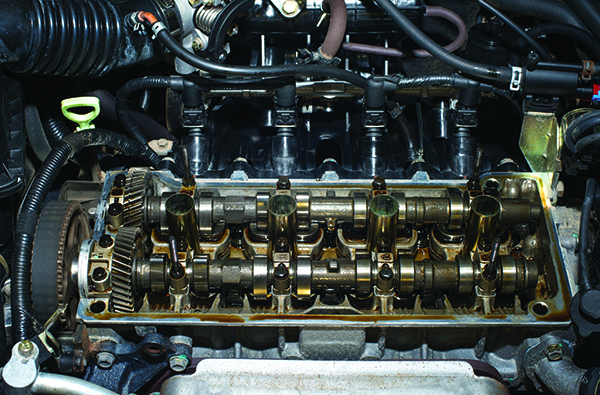
Combustion-engine cars need to be phased out in Europe by 2025

With a view to limiting global warming to 1.5°C, internal-combustion-engine (diesel and petrol) cars need to be phased out in Europe by 2025; hybrid vehicles by 2028.

Energy solutions for low-carbon cities

Accounting for 55% of the world’s population, about 75% of global CO2 emissions and 66% of global energy demand, cities have a crucial role to play in accelerating the sustainable energy transition.

Air quality is slowly improving

Better air quality in Europe has led to a reduction in premature deaths over the past decade, but excessive levels of hazardous tiny particles are still causing more than 400,000 premature deaths every year.

EU’s methane strategy fails on agriculture

No reduction targets, no mandatory actions to cut methane emissions from agricultural farms, and no coherence with existing climate and air quality objectives are some of the reasons why the Commission’s Methane Strategy is inadequate

EU agriculture policy not in line with the Green Deal

The current reform of the Common Agricultural Policy has been criticised for failing to live up to the Green Deal. The agriculture sector has a vast impact on our ability to achieve climate targets and to limit harmful effects on the environment.

Revision of the Energy Efficiency Directive for stronger climate action

A bold energy efficiency policy is the precondition for successful climate action. For the EU to reach the increased ambitions of the European Green Deal, revising the Energy Efficiency Directive is vital. AirClim supports CAN Europe’s call for an increase in the level of ambition of the EU’s 2030 energy savings target to at least 45% and for the target to be binding.

Oil and fossil gas companies Equinor, Shell and Total plan CO₂ storage with Norwegian government

Licensing of Norwegian CO2 storage for current CCS projects is under way – but important barriers remain.

Ocean acidification is poorly governed

The problems associated with and the solutions needed to address OA are unique and cannot be bundled together with traditional climate change responses and measures.

Emissions from ships and planes continue to rise

Air and sea transport must reduce GHG emissions at the same rate as land transport by 2040 at the latest in industrialised countries, and by 2050 global.

Enormous costs for CCS

“Full Chain CCS” in Norway has received finance from the government. It will cost 1.74 billion euros to capture and store CO2 from one cement factory, equivalent to €434/tonne of CO2, or about 17 times the price in European emission trading.

37 countries say they have reduced GHGs by about 25% since 1990

The UN confirmed in October 2020 that the second commitment period of the Kyoto Protocol had been ratified.

High health costs for air pollution in cities

Air pollution costs the average European city resident €1,276 per year, according to the largest study of its kind.

Europeans call for zero emissions by 2030 in poll

EU needs to adopt ambitious and fair climate targets for 2030 and 2040.

Global sulphur pollution decreasing

In 2019, emissions of sulphur dioxide from large point sources decreased in all of the top three emitter countries – India, Russia and China. The biggest sulphur emissions hotspot is still the Norilsk smelter in northern Russia.

In brief

15% of global Covid deaths linked to air pollution

The Federal Environment Agency (UBA) Long-term exposure to air pollution has been linked to an increased risk of dying from Covid-19 and a new study has estimated the proportion of deaths from the coronavirus that could be attributed to the exacerbating effects of air pollution for every country in the world.

The study, published in Cardiovascular Research, estimated that about 15 per cent of deaths worldwide from Covid-19 could be attributed to long-term exposure to air pollution. In Europe the proportion was about 19 per cent, in North America it was 17 per cent, and in East Asia about 27 per cent.

The researchers write that these proportions are an estimate of “the fraction of Covid-19 deaths that could be avoided if the population were exposed to lower counterfactual air pollution levels without fossil-fuel-related and other anthropogenic emissions”, and add that this “attributable fraction does not imply a direct cause-effect relationship between air pollution and Covid-19 mortality (although it is possible). Instead it refers to relationships between two, direct and indirect, i.e. by aggravating co-morbidities that could lead to fatal health outcomes of the virus infection”.

Source: European Society of Cardiology (ESC), 27 October 2020.

Link to the study “Regional and global contributions of air pollution to risk of death from Covid-19”: https://academic.oup.com/cardiovascres/advance-article/doi/10.1093/cvr/c...

Improved air quality in Covid-19 lockdown

Improved air quality during lockdown averted tens of thousands of premature deaths, according to a study published in The Lancet Planetary Health.

Between February and March, the researchers found that an estimated 24,200 premature deaths associated with PM2.5 pollution were averted throughout China. This compares to the reported 3309 fatalities from Covid-19. In Europe, although Covid-19 fatalities were far higher, a reduction in pollution meant that 2109 premature deaths were avoided.

The researchers highlight that the averted fatality figures become much larger when the long-term effects are considered (up to 287,000 in China and 29,500 in Europe).

Paola Crippa, lead author of the study said: “It was somewhat unexpected to see that the number of averted fatalities in the long term due to air quality improvements is similar to the Covid-19 related fatalities, at least in China where a small number of Covid-19 casualties were reported. These results underline the severity of air quality issues in some areas of the world and the need for immediate action.”

Source: Air Quality News, 19 October 2020.

Link to the study “Short-term and long-term health impacts of air pollution reductions from Covid-19 lockdowns in China and Europe: a modelling study”: https://doi.org/10.1016/S2542-5196(20)30224-2

Clean air for all is achievable

Achieving clean air across the world is possible, according to a new study by IIASA. The researchers conclude that a combination of ambitious policies focusing on pollution controls, energy and climate, agricultural production systems and addressing human consumption habits could drastically improve air quality throughout the world.

By 2040, mean population exposure to PM2.5 from anthropogenic sources could be reduced by about 75 per cent relative to 2015 and brought well below the WHO guideline in large areas of the world, thus saving millions of premature deaths annually. At the same time, the measures that deliver clean air would also significantly reduce emissions of greenhouse gases and contribute to multiple UN sustainable development goals.

“Even if WHO air quality standards are currently exceeded by more than a factor of ten in many parts of the world, clean air is achievable globally with enhanced political will,” concludes lead author Markus Amann.

Source: IIASA News, 29 September 2020. Link: https://iiasa.ac.at/web/home/about/news/200929-Reducing-global-air-pollu...

New EU infringement actions on air pollution

In its October infringements package, the European Commission announced that it will file a case at the European Court of Justice (ECJ) against the French government over its systematic failure to meet EU air quality standards for particulate matter (PM10).

Letters of formal notice were sent to Croatia and Italy for breaching the limit values for particulate matter (PM10 and/or PM2.5) in several areas, and the measures taken to lower air pollution are insufficient to keep exceedance periods as short as possible.

Reasoned opinions were sent to Greece and Romania, as they have still failed to adopt National Air Pollution Control Plans, which according to the deadline set in the NEC Directive should have been submitted by 1 April 2019.

Link: https://ec.europa.eu/commission/presscorner/detail/en/inf_20_1687

EU court rules against Italy

On 10 November, the EU Court of Justice (ECJ) ruled that Italy has failed to tackle illegally high levels of air pollution, by systematically and repeatedly breaching daily and annual limit values for particulate matter (PM10) across several regions, including Rome, Palermo, Milan, Turin, Vicenza and the Lombardy region.

The persistent breach of limit values is enough in itself to demonstrate that Italy “has not implemented appropriate and effective measures” that would keep the period of excessive pollution as “short as possible”, the court stated. Should Italy fail to comply with the ruling, the Commission has the power to bring the case back to the court and seek financial penalties.

Source: Ends Europe Daily, 10 November 2020. Link to the ECJ ruling: https://curia.europa.eu/jcms/upload/docs/application/pdf/2020-11/cp20013...

Court cases bring improved air quality

German cities taken to court for breaching air quality standards saw pollution levels drop twice as much as other cities between 2018 and 2019, according to green group Deutsche Umwelthilfe (DUH), which has taken legal action over consistently dangerous levels of air pollution in 40 German cities. Nearly half of these cases were brought in liaison with environmental law charity ClientEarth.

Between 2018 and 2019, levels of nitrogen dioxide (NO₂) came down by an average of 4.2 µg/m³ in cities where air quality litigation has been pursued. In cities where no legal action was taken, the average drop was just 2.1 µg/m³.

In February 2018, the country’s highest court confirmed that diesel restrictions were not only possible but legally necessary when they were the most efficient way to bring down illegal levels of pollution. Later court results have included wins and settlements where less polluted cities propose other traffic control measures, such as improvements to bus, train and cycle infrastructure, discounts on season tickets and fleet-wide bus retrofits.

Source: DUH press release, 8 October 2020. Link: https://www.duh.de/presse/pressemitteilungen/pressemitteilung/court-case...

EU consultation on Zero-Pollution Ambition

A new consultation is open from 11 November 2020 to 10 February 2021 to gather views from citizens and stakeholders on an EU action plan “Towards a Zero-Pollution Ambition for air, water and soil”. In its European Green Deal, the European Commission said that the EU needs to move towards a zero-pollution ambition, and better prevent and remedy pollution of air, water and soil, and from consumer products. The Commission has announced that it will adopt a Zero-Pollution Action Plan in 2021.

Link: https://ec.europa.eu/info/law/better-regulation/have-your-say/initiative...

Low Energy Demand (LED) study scenario, without using CCS:

LED is one of four illustrative model pathways in the IPCC Special Report on Global Warming of 1.5°C, which does not use CCS and which quantifies the impacts of digitalization, a sharing economy and behavioural change. LED is a low long-term global energy demand scenario. The drastic transformative changes on the energy end-use side enable rapid decarbonisation of the energy supply and near-zero emissions by 2050, and demonstrate significant co-benefits for six of the UN Sustainable Development Goals (SDGs).

https://iiasa.ac.at/web/home/research/researchPrograms/TransitionstoNewT...

North Sea methane leak caused by oil industry blow-out

The leak was caused by a major blow-out during an oil drilling operation 30 years ago, and is still emitting methane. “Like many places across the North Sea, climate-destroying methane has been leaking here for decades, yet the oil and gas industry, instead of closing the leak and monitoring it, continues to drill holes in the seabed, while decision-makers turn a blind eye.” said Dr Sandra Schöttner from Greenpeace. In 1990, the Swedish Stena Drilling Company, on behalf of Mobil North Sea (now Exxon Mobil), accidentally tapped a gas pocket with the drilling platform High Seas Driller while searching for oil, causing a blow-out that resulted in several craters on the seabed.

An international team of scientists had previously been to this site and estimated in 2015 that up to 90 litres of methane per second were being released. The leaking borehole has been returned by Exxon Mobil to the British state, which in 2000 determined that further monitoring was not required, believing that the reservoir would soon be depleted. But 30 years later the greenhouse gas keeps escaping into the atmosphere. According to a recent independent study, an estimated total of 8,000–30,000 tonnes of methane per year escape from gas leaks from more than 15,000 boreholes in the North Sea – adding to the 72,000 tonnes of methane that normal operations of platforms in the North Sea release every year.

https://www.greenpeace.org/international/press-release/44638/greenpeace-...

#WorldWeWant Campaign on Climate Impacts

The campaign by Climate Action Network drives collective action through the stories of communities affected by the climate crisis and serves as a clarion call for governments to address multiple and compounding crises to protect their citizens and ensure a safe and resilient future. Through compelling, locally-produced, short smartphone videos we witness how decades of inaction on the climate crisis are impacting people, but also learn how communities are using grassroots solutions in both developing and developed countries to hold their leaders accountable.

http://www.climatenetwork.org/event/worldwewant-campaign-climate-impacts

New reports on ships’ GHG emissions

Three new briefings relating to greenhouse gas emissions from maritime shipping were recently made available by the European Parliament:

Billion-dollar savings for container lines

It was expected that the new 0.5-per-cent sulphur fuels (also known as VLSFO) that became mandatory as from 1 January 2020 would be significantly more expensive than traditional high-sulphur bunker fuel with a price spread of around USD 200 per ton. As container lines typically use around 55 million tons fuel per year, this would result in added costs of USD 11 billion in 2020, according to analyst firm Sea-Intelligence.

But the price spread has since then narrowed considerably, to the significant benefit of shipping lines. “If we assume the VLSFO fuel price for November and December remains at the same average level as seen in August–October 2020, we will end 2020 at a point where the carriers collectively have saved 2.2 billion USD on fuel, compared to 2019,” writes the firm.

Source: Shipping Watch, 26 October 2020

Shipping on its way into ETS

When the European Parliament voted on its position for the revision of the EU’s monitoring, reporting and verification (MRV) system for ship emissions in September, they agreed that ships must be included in the EU Emissions Trading System (ETS) and that shipping companies should reduce their annual average CO₂ emissions per transport unit for all their ships by at least 40 per cent by 2030.

“The Parliament is tired of inaction in the face of steadily rising shipping emissions. This is a clear signal to President von der Leyen that the EU’s more ambitious 2030 climate target must apply to maritime emissions too and that ships must pay for all of their pollution in the EU carbon market,” said Faïg Abbasov at Transport & Environment (T&E).

The Parliament also agreed that by 2030 ships should be required to stop emitting harmful air pollutants and greenhouse gases when docked in EU ports, and called for the monitoring system for shipping emissions to be made more transparent, too.

Sources: T&E press release, 15 September 2020; Shipping Watch, 17 September 2020.

IMO paves way for rising GHG emissions from shipping

By approving a proposal that will allow the shipping sector’s 1 billion tonnes of annual greenhouse gas (GHG) emissions to keep rising for the rest of this decade, governments have backtracked on their own commitments, according to environmental organisations. The decision was taken at a key meeting of the International Maritime Organisation’s (IMO) Marine Environment Protection Committee during 16–20 November.

As acknowledged by many countries in the talks, the approved proposal breaks the initial IMO GHG strategy in three crucial ways. It will fail to reduce emissions before 2023, will not peak emissions as soon as possible, and will not set shipping CO₂ emissions on a pathway consistent with the Paris Agreement goals.

Nations and regions serious about facing the climate crisis must now take immediate national and regional action to curb ship emissions, the environmental NGOs said. Nations should act swiftly to set carbon equivalent intensity regulations consistent with the Paris Agreement for ships calling at their ports; require ships to report and pay for their pollution where they dock, and start to create low- and zero-emission priority shipping corridors.

Source: Joint statement from Pacific Environment, WWF and the Clean Shipping Coalition, 17 November 2020.

Stop the discharge of washwater from scrubbers

Ships should switch to cleaner fuels rather than using scrubbers to reduce their SO₂ emissions, says the international research organisation International Council for the Exploration of the Sea (ICES), which consists of more than 4,000 researchers from 20 countries.

Until such a fuel shift is completed, the discharging of scrubber water into the marine environment should be avoided. According to ICES, this will require significant investment in technological advances and port reception facilities to enable the use of closed-loop scrubber systems with land-based disposal and treatment.

Until scrubber water discharge can be avoided, ICES recommends that: A) Discharges in specific areas (e.g. Particularly Sensitive Sea Areas and Special Areas, as defined by the IMO) should be banned; B) Stringent limits for contaminants in discharge water should be set and enforced; and C) Further development of standards and protocols for measuring, monitoring, and reporting on scrubber discharge water for contaminants and other parameters should be ensured

Source: ICES Viewpoint, 24 September 2020. Link: http://www.ices.dk/sites/pub/Publication%20Reports/Advice/2020/2020/vp.2...