Energy solutions for low-carbon cities

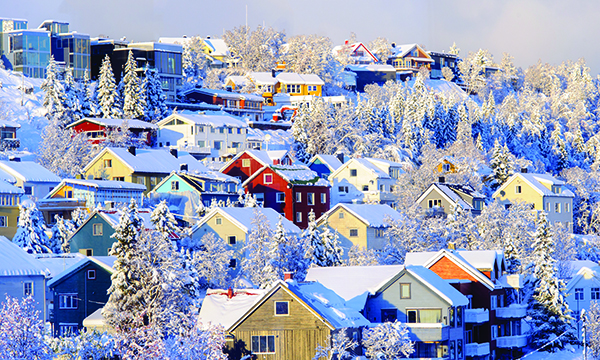
IRENA has published a report which analyses the ways that cities can scale up their use of locally available renewables as they move to decarbonise their energy systems. Today, more than half the world’s population lives in cities and accounts for 80% of the global GDP. The Intergovernmental Panel on Climate Change has found that cities contribute 71–76% of global energy-related carbon dioxide emissions. Fossil fuel and other emissions are associated with serious air pollution problems in over 80% of the world’s cities, generating approximately 7 million premature deaths each year1. Urban settlements are expected to grow by another 2.5 billion people over the next thirty years2. In the coming decade this growing urbanisation will coincide with the pressing need to decarbonise the global energy system.

As a result of their numerous roles, including urban planning and the provision of services, cities have great potential to increase the use of renewable energy while achieving local goals such as reducing air pollution to improve public health, mitigating climate change, supporting the local economy and building resilient infrastructure. In addition, it is important to include renewable energy technologies in the infrastructure development of urban areas as soon as possible to decrease the need for costly retro fitting in the future.

In many urban areas, trends in renewable technology are already developing, such as energy storage, smart charging for electric vehicles, renewable power-to-heat and renewable power-to-hydrogen, digital technologies and intelligent energy management. The trend has accelerated due to the rapid cost reductions in solar PV panels and battery storage systems. This development is expected to continue, along with the arrival of innovative business models such as energy-as-a-service, aggregators, peer-to-peer electricity trading, community-ownership models, pay-as-you-go and urban energy planning.

One of the most distinct characteristics of an urban energy system is that it serves as the sociotechnical interface that links the physical energy system with its users. Hence, consumer behaviour matters more than just the energy system alone. Innovations in energy systems have contributed to the view and practice of the prosumer, an actor that is both a consumer and a producer of energy. Examples are rooftop solar PV systems with battery storage and smart energy management. New actors are also appearing, such as aggregators, which bundle several distributed energy resources into a single entity (a virtual power plant) to interact and trade in power or markets.

The dynamics between system operators and consumers are changing and the boundary between energy production and consumption is becoming blurred. It is important for cities to see and use the potential of this development and form appropriate institutional support. Over the past decade, several cities have sought to gain greater control over their energy systems. By 2019, some 671 cities had set at least one target favouring the use of renewables in their jurisdictions. More than 60% of these cities had set a target to achieve 100% renewable energy, and 45% of them are in Europe. City governments can be trendsetters, leading by example to push change. They act as laboratories of innovation for new policies and business models, testing concepts and approaches. As such, the actions taken by cities can provide important lessons and influence change at the state and national levels, while at the same time providing valuable case studies for other cities around the world.

The technologies that are of special interest in urban environments are as follows:

Solar photovoltaics (PV): When it comes to solar irradiance the analysis shows that 95% of the cities that have the highest solar potential (i.e., cities in the top 10% for global horizontal irradiance, or GHI) do not have a set target for supporting renewable energy development. Even among the cities in the top 30% for solar potential, only 6% (39 cities) have a renewable energy target and only 2% (14 cities) have a target for 100% renewables. Urban-based solar PV systems are generally smaller in scale than ground-mounted systems located on the outskirts of cities. These systems are usually installed on, or integrated with, the roofs and facades of buildings.

Solar thermal: Solar thermal systems, which rely on different types of solar collectors, are usually used for water and space heating and in some cases for industrial process heat. Increasingly, cities and countries have adopted building codes mandating the use of solar water heaters for all new buildings. The solar system can be installed on the ground or on a building roof to supply heat for the building, community, district or city. However, in countries where natural gas is cheap and is the dominant heating source, solar thermal systems are less competitive in the absence of incentives or promotional schemes to support their social and environmental benefits.

Solar thermal cooling: With the growth in global cooling demand tripling from 600 terawatt-hours (TWh) in 1990 to 2,000 TWh in 2016, and projected to at least triple again by 2050, solar thermal energy has gradually extended into the cooling sector. For cooling purposes, solar thermal is typically coupled with absorption chillers to lower peak demand on the grid during hot summers, reducing blackouts and the costs for grid enhancement.

Bioenergy and waste-to-energy: These biomass- based energy sources can provide a relatively reliable and consistent supply of energy in comparison with solar PV. For cities, waste-to-energy offers a promising way to create a circular economy. However, the uncertainties of obtaining a sustainable supply of feedstock need to be addressed.

Urban wind power: Wind power has been used only marginally in cities and faces huge challenges to scale up. While examples exist of urban wind turbines generating electricity, their performance needs to be improved substantially, and large-scale implementation is scarce. The use of wind turbines in urban environments is mainly in the research and development phase. The lack of experimental data is a big drawback in the development of urban wind turbines.

Geothermal energy for direct use: With the need to decarbonise the heating sector, and recognising the potential and advantages of direct use of geothermal energy, applications in cities have been growing. Globally, the installed capacity of geothermal direct use has more than doubled since 2010, reaching 107,727 megawatts-thermal deployed across 88 countries in 2019. Geothermal technology is used mainly for space heating and cooling as well as for hot water in cities, through both stand-alone and district heating systems. For new cities or for the expansion of existing cities, installing geothermal energy systems would be much more cost efficient than integrating the systems into established infrastructure.

For most cities, integrating the renewable energy technologies described above would require upgrading the urban infrastructure to accommodate them, without compromising on operational reliability and stability. This highlights the importance of developing “smart” grids through innovation and the adoption of enabling technologies such as electric vehicles, energy storage systems and intelligent energy management systems. Smart grids present opportunities for using higher shares of variable renewables and for improvements in system efficiency.

In summary, renewable energy technologies that are integrated with local energy systems will be a vital foundation for creating the transformation needed in the cities of the future. When it comes to climate change “Cities are on the frontline of impact, but also of the solutions,” said Inger Andersen, Executive Director of UNEP3. How we decide to build our urban energy systems today will shape our collective future.


Emilia Samuelsson


1. WHO Global Ambient Air Quality Database (database), World Health Organization, Geneva, www.who.int/airpollution/data/cities/en.

2. UN DESA (2018), The world’s cities in 2018 – data booklet, United Nations Department of Economic and Social Affairs, Population Division, New York, www.un.org/en/events/citiesday/assets/ pdf/the_worlds_cities_in_2018_data_booklet.pdf

3. https://www.unenvironment.org/news-and-stories/story/cities-where-fight-...
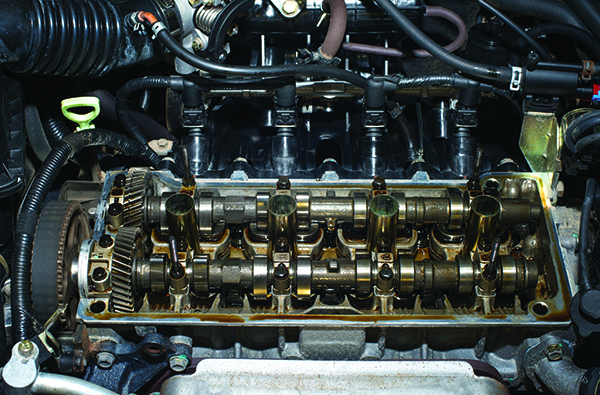
Combustion-engine cars need to be phased out in Europe by 2025

With a view to limiting global warming to 1.5°C, internal-combustion-engine (diesel and petrol) cars need to be phased out in Europe by 2025; hybrid vehicles by 2028.

Energy solutions for low-carbon cities

Accounting for 55% of the world’s population, about 75% of global CO2 emissions and 66% of global energy demand, cities have a crucial role to play in accelerating the sustainable energy transition.

Air quality is slowly improving

Better air quality in Europe has led to a reduction in premature deaths over the past decade, but excessive levels of hazardous tiny particles are still causing more than 400,000 premature deaths every year.

EU’s methane strategy fails on agriculture

No reduction targets, no mandatory actions to cut methane emissions from agricultural farms, and no coherence with existing climate and air quality objectives are some of the reasons why the Commission’s Methane Strategy is inadequate

EU agriculture policy not in line with the Green Deal

The current reform of the Common Agricultural Policy has been criticised for failing to live up to the Green Deal. The agriculture sector has a vast impact on our ability to achieve climate targets and to limit harmful effects on the environment.

Revision of the Energy Efficiency Directive for stronger climate action

A bold energy efficiency policy is the precondition for successful climate action. For the EU to reach the increased ambitions of the European Green Deal, revising the Energy Efficiency Directive is vital. AirClim supports CAN Europe’s call for an increase in the level of ambition of the EU’s 2030 energy savings target to at least 45% and for the target to be binding.

Oil and fossil gas companies Equinor, Shell and Total plan CO₂ storage with Norwegian government

Licensing of Norwegian CO2 storage for current CCS projects is under way – but important barriers remain.

Ocean acidification is poorly governed

The problems associated with and the solutions needed to address OA are unique and cannot be bundled together with traditional climate change responses and measures.

Emissions from ships and planes continue to rise

Air and sea transport must reduce GHG emissions at the same rate as land transport by 2040 at the latest in industrialised countries, and by 2050 global.

Enormous costs for CCS

“Full Chain CCS” in Norway has received finance from the government. It will cost 1.74 billion euros to capture and store CO2 from one cement factory, equivalent to €434/tonne of CO2, or about 17 times the price in European emission trading.

37 countries say they have reduced GHGs by about 25% since 1990

The UN confirmed in October 2020 that the second commitment period of the Kyoto Protocol had been ratified.

High health costs for air pollution in cities

Air pollution costs the average European city resident €1,276 per year, according to the largest study of its kind.

Europeans call for zero emissions by 2030 in poll

EU needs to adopt ambitious and fair climate targets for 2030 and 2040.

Global sulphur pollution decreasing

In 2019, emissions of sulphur dioxide from large point sources decreased in all of the top three emitter countries – India, Russia and China. The biggest sulphur emissions hotspot is still the Norilsk smelter in northern Russia.

In brief

15% of global Covid deaths linked to air pollution

The Federal Environment Agency (UBA) Long-term exposure to air pollution has been linked to an increased risk of dying from Covid-19 and a new study has estimated the proportion of deaths from the coronavirus that could be attributed to the exacerbating effects of air pollution for every country in the world.

The study, published in Cardiovascular Research, estimated that about 15 per cent of deaths worldwide from Covid-19 could be attributed to long-term exposure to air pollution. In Europe the proportion was about 19 per cent, in North America it was 17 per cent, and in East Asia about 27 per cent.

The researchers write that these proportions are an estimate of “the fraction of Covid-19 deaths that could be avoided if the population were exposed to lower counterfactual air pollution levels without fossil-fuel-related and other anthropogenic emissions”, and add that this “attributable fraction does not imply a direct cause-effect relationship between air pollution and Covid-19 mortality (although it is possible). Instead it refers to relationships between two, direct and indirect, i.e. by aggravating co-morbidities that could lead to fatal health outcomes of the virus infection”.

Source: European Society of Cardiology (ESC), 27 October 2020.

Link to the study “Regional and global contributions of air pollution to risk of death from Covid-19”: https://academic.oup.com/cardiovascres/advance-article/doi/10.1093/cvr/c...

Improved air quality in Covid-19 lockdown

Improved air quality during lockdown averted tens of thousands of premature deaths, according to a study published in The Lancet Planetary Health.

Between February and March, the researchers found that an estimated 24,200 premature deaths associated with PM2.5 pollution were averted throughout China. This compares to the reported 3309 fatalities from Covid-19. In Europe, although Covid-19 fatalities were far higher, a reduction in pollution meant that 2109 premature deaths were avoided.

The researchers highlight that the averted fatality figures become much larger when the long-term effects are considered (up to 287,000 in China and 29,500 in Europe).

Paola Crippa, lead author of the study said: “It was somewhat unexpected to see that the number of averted fatalities in the long term due to air quality improvements is similar to the Covid-19 related fatalities, at least in China where a small number of Covid-19 casualties were reported. These results underline the severity of air quality issues in some areas of the world and the need for immediate action.”

Source: Air Quality News, 19 October 2020.

Link to the study “Short-term and long-term health impacts of air pollution reductions from Covid-19 lockdowns in China and Europe: a modelling study”: https://doi.org/10.1016/S2542-5196(20)30224-2

Clean air for all is achievable

Achieving clean air across the world is possible, according to a new study by IIASA. The researchers conclude that a combination of ambitious policies focusing on pollution controls, energy and climate, agricultural production systems and addressing human consumption habits could drastically improve air quality throughout the world.

By 2040, mean population exposure to PM2.5 from anthropogenic sources could be reduced by about 75 per cent relative to 2015 and brought well below the WHO guideline in large areas of the world, thus saving millions of premature deaths annually. At the same time, the measures that deliver clean air would also significantly reduce emissions of greenhouse gases and contribute to multiple UN sustainable development goals.

“Even if WHO air quality standards are currently exceeded by more than a factor of ten in many parts of the world, clean air is achievable globally with enhanced political will,” concludes lead author Markus Amann.

Source: IIASA News, 29 September 2020. Link: https://iiasa.ac.at/web/home/about/news/200929-Reducing-global-air-pollu...

New EU infringement actions on air pollution

In its October infringements package, the European Commission announced that it will file a case at the European Court of Justice (ECJ) against the French government over its systematic failure to meet EU air quality standards for particulate matter (PM10).

Letters of formal notice were sent to Croatia and Italy for breaching the limit values for particulate matter (PM10 and/or PM2.5) in several areas, and the measures taken to lower air pollution are insufficient to keep exceedance periods as short as possible.

Reasoned opinions were sent to Greece and Romania, as they have still failed to adopt National Air Pollution Control Plans, which according to the deadline set in the NEC Directive should have been submitted by 1 April 2019.

Link: https://ec.europa.eu/commission/presscorner/detail/en/inf_20_1687

EU court rules against Italy

On 10 November, the EU Court of Justice (ECJ) ruled that Italy has failed to tackle illegally high levels of air pollution, by systematically and repeatedly breaching daily and annual limit values for particulate matter (PM10) across several regions, including Rome, Palermo, Milan, Turin, Vicenza and the Lombardy region.

The persistent breach of limit values is enough in itself to demonstrate that Italy “has not implemented appropriate and effective measures” that would keep the period of excessive pollution as “short as possible”, the court stated. Should Italy fail to comply with the ruling, the Commission has the power to bring the case back to the court and seek financial penalties.

Source: Ends Europe Daily, 10 November 2020. Link to the ECJ ruling: https://curia.europa.eu/jcms/upload/docs/application/pdf/2020-11/cp20013...

Court cases bring improved air quality

German cities taken to court for breaching air quality standards saw pollution levels drop twice as much as other cities between 2018 and 2019, according to green group Deutsche Umwelthilfe (DUH), which has taken legal action over consistently dangerous levels of air pollution in 40 German cities. Nearly half of these cases were brought in liaison with environmental law charity ClientEarth.

Between 2018 and 2019, levels of nitrogen dioxide (NO₂) came down by an average of 4.2 µg/m³ in cities where air quality litigation has been pursued. In cities where no legal action was taken, the average drop was just 2.1 µg/m³.

In February 2018, the country’s highest court confirmed that diesel restrictions were not only possible but legally necessary when they were the most efficient way to bring down illegal levels of pollution. Later court results have included wins and settlements where less polluted cities propose other traffic control measures, such as improvements to bus, train and cycle infrastructure, discounts on season tickets and fleet-wide bus retrofits.

Source: DUH press release, 8 October 2020. Link: https://www.duh.de/presse/pressemitteilungen/pressemitteilung/court-case...

EU consultation on Zero-Pollution Ambition

A new consultation is open from 11 November 2020 to 10 February 2021 to gather views from citizens and stakeholders on an EU action plan “Towards a Zero-Pollution Ambition for air, water and soil”. In its European Green Deal, the European Commission said that the EU needs to move towards a zero-pollution ambition, and better prevent and remedy pollution of air, water and soil, and from consumer products. The Commission has announced that it will adopt a Zero-Pollution Action Plan in 2021.

Link: https://ec.europa.eu/info/law/better-regulation/have-your-say/initiative...

North Sea methane leak caused by oil industry blow-out

The leak was caused by a major blow-out during an oil drilling operation 30 years ago, and is still emitting methane. “Like many places across the North Sea, climate-destroying methane has been leaking here for decades, yet the oil and gas industry, instead of closing the leak and monitoring it, continues to drill holes in the seabed, while decision-makers turn a blind eye.” said Dr Sandra Schöttner from Greenpeace. In 1990, the Swedish Stena Drilling Company, on behalf of Mobil North Sea (now Exxon Mobil), accidentally tapped a gas pocket with the drilling platform High Seas Driller while searching for oil, causing a blow-out that resulted in several craters on the seabed.

An international team of scientists had previously been to this site and estimated in 2015 that up to 90 litres of methane per second were being released. The leaking borehole has been returned by Exxon Mobil to the British state, which in 2000 determined that further monitoring was not required, believing that the reservoir would soon be depleted. But 30 years later the greenhouse gas keeps escaping into the atmosphere. According to a recent independent study, an estimated total of 8,000–30,000 tonnes of methane per year escape from gas leaks from more than 15,000 boreholes in the North Sea – adding to the 72,000 tonnes of methane that normal operations of platforms in the North Sea release every year.

https://www.greenpeace.org/international/press-release/44638/greenpeace-...

Low Energy Demand (LED) study scenario, without using CCS:

LED is one of four illustrative model pathways in the IPCC Special Report on Global Warming of 1.5°C, which does not use CCS and which quantifies the impacts of digitalization, a sharing economy and behavioural change. LED is a low long-term global energy demand scenario. The drastic transformative changes on the energy end-use side enable rapid decarbonisation of the energy supply and near-zero emissions by 2050, and demonstrate significant co-benefits for six of the UN Sustainable Development Goals (SDGs).

https://iiasa.ac.at/web/home/research/researchPrograms/TransitionstoNewT...

#WorldWeWant Campaign on Climate Impacts

The campaign by Climate Action Network drives collective action through the stories of communities affected by the climate crisis and serves as a clarion call for governments to address multiple and compounding crises to protect their citizens and ensure a safe and resilient future. Through compelling, locally-produced, short smartphone videos we witness how decades of inaction on the climate crisis are impacting people, but also learn how communities are using grassroots solutions in both developing and developed countries to hold their leaders accountable.

http://www.climatenetwork.org/event/worldwewant-campaign-climate-impacts

New reports on ships’ GHG emissions

Three new briefings relating to greenhouse gas emissions from maritime shipping were recently made available by the European Parliament:

Billion-dollar savings for container lines

It was expected that the new 0.5-per-cent sulphur fuels (also known as VLSFO) that became mandatory as from 1 January 2020 would be significantly more expensive than traditional high-sulphur bunker fuel with a price spread of around USD 200 per ton. As container lines typically use around 55 million tons fuel per year, this would result in added costs of USD 11 billion in 2020, according to analyst firm Sea-Intelligence.

But the price spread has since then narrowed considerably, to the significant benefit of shipping lines. “If we assume the VLSFO fuel price for November and December remains at the same average level as seen in August–October 2020, we will end 2020 at a point where the carriers collectively have saved 2.2 billion USD on fuel, compared to 2019,” writes the firm.

Source: Shipping Watch, 26 October 2020

Shipping on its way into ETS

When the European Parliament voted on its position for the revision of the EU’s monitoring, reporting and verification (MRV) system for ship emissions in September, they agreed that ships must be included in the EU Emissions Trading System (ETS) and that shipping companies should reduce their annual average CO₂ emissions per transport unit for all their ships by at least 40 per cent by 2030.

“The Parliament is tired of inaction in the face of steadily rising shipping emissions. This is a clear signal to President von der Leyen that the EU’s more ambitious 2030 climate target must apply to maritime emissions too and that ships must pay for all of their pollution in the EU carbon market,” said Faïg Abbasov at Transport & Environment (T&E).

The Parliament also agreed that by 2030 ships should be required to stop emitting harmful air pollutants and greenhouse gases when docked in EU ports, and called for the monitoring system for shipping emissions to be made more transparent, too.

Sources: T&E press release, 15 September 2020; Shipping Watch, 17 September 2020.

IMO paves way for rising GHG emissions from shipping

By approving a proposal that will allow the shipping sector’s 1 billion tonnes of annual greenhouse gas (GHG) emissions to keep rising for the rest of this decade, governments have backtracked on their own commitments, according to environmental organisations. The decision was taken at a key meeting of the International Maritime Organisation’s (IMO) Marine Environment Protection Committee during 16–20 November.

As acknowledged by many countries in the talks, the approved proposal breaks the initial IMO GHG strategy in three crucial ways. It will fail to reduce emissions before 2023, will not peak emissions as soon as possible, and will not set shipping CO₂ emissions on a pathway consistent with the Paris Agreement goals.

Nations and regions serious about facing the climate crisis must now take immediate national and regional action to curb ship emissions, the environmental NGOs said. Nations should act swiftly to set carbon equivalent intensity regulations consistent with the Paris Agreement for ships calling at their ports; require ships to report and pay for their pollution where they dock, and start to create low- and zero-emission priority shipping corridors.

Source: Joint statement from Pacific Environment, WWF and the Clean Shipping Coalition, 17 November 2020.

Stop the discharge of washwater from scrubbers

Ships should switch to cleaner fuels rather than using scrubbers to reduce their SO₂ emissions, says the international research organisation International Council for the Exploration of the Sea (ICES), which consists of more than 4,000 researchers from 20 countries.

Until such a fuel shift is completed, the discharging of scrubber water into the marine environment should be avoided. According to ICES, this will require significant investment in technological advances and port reception facilities to enable the use of closed-loop scrubber systems with land-based disposal and treatment.

Until scrubber water discharge can be avoided, ICES recommends that: A) Discharges in specific areas (e.g. Particularly Sensitive Sea Areas and Special Areas, as defined by the IMO) should be banned; B) Stringent limits for contaminants in discharge water should be set and enforced; and C) Further development of standards and protocols for measuring, monitoring, and reporting on scrubber discharge water for contaminants and other parameters should be ensured

Source: ICES Viewpoint, 24 September 2020. Link: http://www.ices.dk/sites/pub/Publication%20Reports/Advice/2020/2020/vp.2...